Friday, November 27, 2009

A Hymn for Advent: “Advents”


Advents
8.6.8.6

In such sad times we look ahead
to futures yet unknown.
We pray amid the fear and dread:
O come, Lord Jesus, come!

We know you in our daily round,
at work and play and home.
Such advents come without a sound.
O come, Lord Jesus, come!

You meet us when we gather here
for Word and meal and song.
Your presence hallows every prayer:
O come, Lord Jesus, come!

The tasks we take on in your name
to let your will be done,
Apart from you are done in vain.
O come, Lord Jesus, come!

And at the end when life is past
and time itself is done;
We'll meet you face to face at last.
O come, Lord Jesus, come!

© 2001 Richard Lawrence Floyd

I wrote this hymn for my local church in the Advent following the 9/11 attacks.

Monday, November 23, 2009

George Hunsinger on the Immanent Trinity and the Economic Trinity


In a conversation with my daughter (who is in divinity school) I was trying to explain to her the distinction between the immanent Trinity and the economic Trinity, in the context of my letter about the baptismal formula.

Then on Saturday George Hunsinger commented on my funny post about Amazon selecting John Allegro's The Sacred Mushroom and the Cross because I had bought George's book The Eucharist and Ecumenism.  

In browsing for recent stuff by George I came across a comment he had made on Per Crucem ad Lucem a couple of weeks ago.  Jason Goroncy had done one of his “Who Said It? polls, where he puts up a passage, and we guess (without benefit of Google) who the theologian is that said it.  The answer in this case turned out to be Richard Bauckham, with whom I studied in St Andrews, but I guessed W. Pannenberg.  

Actually nobody got it right, but somebody guessed it was from George, so he posted a comment that it wasn't something he would have said, and then went on to give such a clear and helpful brief exposition of the Trinity that I read it to my daughter over the phone today, and then I e-mailed George to ask if he would be willing to let me post it here. He was and so here it is:
“Oh dear! Someone in the original thread guessed that I might have said it. I wouldn’t have, though I might have said something like this:
There is only one Holy Trinity, now and for ever. One and the same Trinity exists in two different forms: the one is eternal and immanent; the other, temporal and economic. The former is essential and necessary; the latter, entirely contingent. God would be the Holy Trinity in and for himself — as a perfect communion of love and freedom, joy and peace — whether the world had been created or not.
God’s trinitarian history for us reveals — but does not make him — what he is in and for himself. The aseity, simplicity and perfection of God’s being means that God is what he is as the Holy Trinity independently of the world, and therefore of God’s temporal, worldly history. This history is indeed who God is, but only in a secondary and dependent form.
The eternal form of the Holy Trinity is logically and ontologically prior to its historical, worldly form. The relation of the two trinitarian forms — historical and eternal — is one of inseparable unity and abiding distinction, with an asymmetry in status between them that makes the relation irreversible. The temporal form of the Trinity depends entirely on the eternal form, but the eternal form of the Trinity in no way depends on the temporal form assumed in its historical revelation.
Therefore, we do not know the eternal form of the Trinity except through the temporal form, but through the temporal form we do know that the eternal form is perfect and independent –self-subsistent — in itself.”  (George Hunsinger,  Comment, Per Crucem ad Lucem. November 14)

Sunday, November 22, 2009

The Humor of Karl Barth


Those of us who have drunk deeply from the well of Karl Barth's theology are sometimes accused of taking things too seriously.  There is a quite mistaken but still lingering reputation that his theology is lacking in humor.  But just because Barth's theology is deadly serious doesn't make it deadly, and I often find passages that are downright playful.  So I was delighted to see this mention of Barth's humor in a 1986 editorial in Theology Today by Daniel L. Migliore:
“It is well to be reminded, therefore, that for Barth theology was not primarily a heavy burden but a joyful activity. While it is certainly correct to speak of his theology as Christ-centered, to say that it was rooted in a life-long, uninterrupted conversation with the Bible, and to note how important prayer was in his life and theology, all such characterizations of Barth's work would still miss something essential if they overlooked his remarkable freedom and playfulness. Laughter was deeply etched in Barth's theology and spirituality. He was a theologian with a rare sense of humor.
Humor often arises from the experienced discrepancy between reality and appearance, from the distance between what we pretend we are and what others know us to be, or between what others imagine us to be and what we know of ourselves. Humor thrives on incongruity, disproportion, the sometimes bizarre disparity between assumptions and facts, protocol and performance, the imagined past and the real past, the awaited future and the experienced present. The quality of humor-whether it is harsh or gentle, destructive or humanizing-depends on whether these contradictions and incongruities are held to be eternal and inescapable or provisional and redeemable.
If disproportion and incongruity are the stuff of humor, the life of faith and the work of theology are fields ripe for the harvest, a fact that seems to have been more readily apparent to the children of the world than to theologians. Witness Woody Allen's description of God as an underachiever; or the prayer of Tevye, the poor milkman in Fiddler on the Roof asking God kindly to bestow the undeniably high honor of election for once on some other people than the Jews; or the unlikely defense of God by Yossarian's lady friend in Catch 22 who, although herself an atheist, is so shaken by Yossarian's devilish indictment of God's ineptness or malevolence that she breaks into tears and retorts: "I don't believe in God, but the God I don't believe in is a good God."
As theologians go, Barth was uncommonly appreciative of the rightful place of humor in human life in general and in Christian life in particular. He wondered why the modern apologists for the uniqueness of humanity, who had forgotten the meaning of the creation of men and women in the image of God, had never even mentioned the fact that apparently human beings are the only creatures who laugh. For Barth, humor was a symptom of being human, and it frequently found expression in his conversations and actions.
As a preacher, Barth could acknowledge that some of his sermons were real clinkers, like the one on the sinking of the Titanic which he later noted was as great a disaster as the original event. In the midst of the German church struggle, indeed in the midst of his trial for refusing to practice the Nazi salute at the beginning of his classes, Barth suggested to the court that like Socrates many centuries earlier he actually deserved a reward rather than a punishment from his fellow-citizens. The gesture was of course a complete failure, as one might have expected in the dreadfully humorless world of Nazism.
Barth was also able to laugh about his work as a theologian, recognizing that every theology is a human endeavor with all the limitations and need of continuous revision which this implies. He remarked that when he got to heaven, he would want to have a long conversation about theological method with Schleiermacher-say, for a couple of centuries. He imagined that the angels giggled among themselves when they saw old Karl pushing his cart-load of Church Dogmatics.
Recalling Barth's humor is not a human interest ploy or a curiosity of merely biographical significance. It is certainly not intended to obscure or trivialize the thunderous prophetic criticism which Barth often directed against both church and society in the name of the Word of God. The point is that Barth had not only a sense of humor but a theology of humor, and it was of a piece with his whole theology and practice of Christian freedom in response to the grace of God. His theology of humor can be briefly summarized as follows. First, humor for Barth is often and perhaps primarily self-directed. "Humor is the opposite of all self-admiration and self-praise" (CD III/4, p. 665). There is, in other words, such a thing as Christian freedom to laugh at ourselves, to recognize the incongruity and disproportion between the sinners we still are and the saints we prematurely claim to be, and thus to recognize ever and again the miracle of our being graciously accepted, valued, and honored by God. When one can laugh at oneself, then one can also rightly laugh at others-never bitterly or cynically, never in the superficial spirit of carnival or the poisoned laughter that expresses hatred for, or superiority over, another.
Second, for Barth true humor, far from being an escape from the realities of suffering and evil in the world, is "laughter amid tears." True humor "presupposes rather than excludes the knowledge of suffering" (Ethics, 511). As the child of suffering, humor takes suffering seriously but refuses to give it the last word. It is remarkable, Barth observed, how fundamentally humorless the rich and powerful and self-satisfied of this world are, and how, by contrast, genuine humor often flourishes among the poor. The refusal to become resigned to the reign of suffering and death in the world has enormous personal and political significance.
Third, and most decisively for Barth, humor is grounded in the grace, faithfulness, and promise of God. Humor is part of the freedom which is ours to exercise, thanks to the grace of God in Jesus Christ. It is a sign of liberation and release rather than bondage and resignation. Grace creates "liberated laughter," laughter made possible by the memory of God's faithfulness, the present foretaste of God's new creation, and the hope in the fulfillment of God's promises. To put this another way, humor for Barth is rooted in the glory and beauty of God and is an expression of the delight and pleasure which the God of the gospel evokes in human life. The grace of God in Jesus Christ is beautiful, and it radiates joy and awakens humor (II/1, p. 655).
Of course, it is necessary to distinguish between the time of humor and the time of unambiguous joy. Joy is experienced now, but not continuously or totally. "Joy is anticipatory," it has an "eschatological character" (III/4, p. 377). Humor, like art and human play generally, is oriented to God's future, and can only be properly understood in that context. In Jesus Christ, God's mighty Yes to us has been spoken, and this event signals the beginning of the end of the contradictions of Yes and No, of life and death, of friendship and enmity. Barth's humor points beyond irony or satire, and certainly far beyond ridicule or gallows humor, to the free laughter of children and friends in God's new creation.
So understood, humor is different from, though intimately related to, joy. Joy arises out of the partial presence of the promised Kingdom which has erupted in Christ and in the work of his Spirit. Humor arises out of the still partial presence of this Kingdom, leaving the undeniable incongruity and disproportion between what we and the world still are and what God's grace in Jesus Christ promises that we and the world shall yet become. Joy will find its fulfillment in God's new heaven and new earth; humor belongs to a world between the times. (Daniel L. Migliore, “Reappraising Barth’s Theology,” Editorial, Theology Today, April 1986)

Saturday, November 21, 2009

My personal recommendations from Amazon.com get really weird


If you have ever bought something on-line from Amazon.com, and you werern’t quite on the ball enough to check the box indicating that you don’t want them sending you e-mails giving you their personal recommendations of other books (or whatever ) that you might like to buy, then like me your in-box is jammed with these recommendations.

I don’t know if it is a human being that makes these picks or a computer (I would guess that latter) but sometimes they are amusing. As you may know I am an atonement scholar and buy most of the significant books (and some insignificant ones) about the atonement that come out to keep up with the field. So I get lots of recommendations about the atonement. Which is fine. But I buy even the atonement books from the people I don’t agree with, and they write other books which I also don't agree with, and so these other books are often picked for me too.

Also, the picker can’t seem to distinguish between fiction and non-fiction so Ian McEwan’s Booker Prize-winning novel Atonement is often one my picks.

I also have friends who are writers and I try to buy their books. So, for example, I bought Gretchen Legler’s engaging memoir of her time in Antartica On the Ice, and now my picks contain many polar explorer books, which are kind of fun to consider.

But the funniest pick ever came in my e-mail yesterday. This is going to be a bit of an inside joke for theologians and biblical scholars, but if the rest of you stay with me I think I can explain how weird it is.

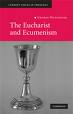
I recently bought from Amazon.com my friend (and former teacher) George Hunsinger’s fine book from Cambridge Press The Eucharist and Ecumenism, a book I hope to say more about on this blog as I get deeper into it.

So Amazon.com, noticing my purchase, recommended that I might also like to buy John Allegro’s controversial 1970 book: The Sacred Mushroom and the Cross, a book that argued, from Allegro’s Dead Sea Scroll research, that the origins of Christianity came out of the practices of fertility cults, one of these practices being the ingestion of hallucinatory mushrooms.

Now biblical scholars rarely have reached such universal agreement as they did on this book. The book pretty much finished Allegro's career as a serious biblical scholar, although the book was a must-read among some of the mystical brothers and sisters in the counter-culture for obvious reasons (I started seminary the year after Allegro's book came out and remember its various receptions well.)

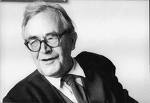
So unless this was a joke, the picker having fun with me (if it is a person), I just can't see any connection between Allegro and George Hunsinger. Hunsinger (pictured top left) is a highly-respected theologian, called by the late great Thomas Torrance the “best theologian in North America.” He teaches at Princeton and has written the standard Barth intoduction called How To Read Karl Barth.

Barth himself died just two years before Allegro's book was published, but one can imagine what he would have made of it.  Hunsinger and Allegro?  Just weird!

Friday, November 20, 2009

The Onion will make you cry


Just kidding. More likely The Onion will make you laugh, but that isn’t nearly as cool a title for a blogpost.  Looking over this month's posts got me wondering if I might be taking myself just a tad too seriously, so here's some comic relief.  My apologies to my international readers who may not find all of the American references quite as funny as I do.

So what is The Onion?  It began humbly enough as a satiric newspaper with only local distribution in Madison, Wisconsin. Founded in 1988 by two University of Wisconsin students, it was distributed free and had cut-out coupons for local Madison eateries.  From the beginning its genius was the send-up of the rich, famous and powerful with stories that were so funny that they were to good to be true, and, in fact they weren't true.  Think Jonathan Swift, Punch, early SNL, or the Colbert Report.

I know that in a recent post I quoted Marilynne's Robinson's displeasure at people getting their news from comics like Leno and Limbaugh, but the Onion is more than the arbiter of attitude about which she was speaking.  The Onion uses humor to deflate big egos, point out injustices, and generally humble the exalted.

Not that The Onion isn't cool. It is way cool, and that is why it spread beyond Madison.  From the beginning it had a near cult following on college campuses, and its availability quickly widened to other university cities, mostly in the Midwest.  Eventually it had a national distribution. The print addition is still distributed free in Madison and several other major cities, and is available by subscription and sold in bookstores.

The Onion added a website in 1996 and now has monster of a site that mimics such real news sites as CNN, ESPN, and C-Span with it ersatz replicas, namely ONN, O-Span, and OSN.

The Onion News Network (ONN) has video clips that look like real news stories.  They have actors playing politicians in solemn assemblies. They have down the look and sound of some of the more soul-deadening congressional debates. Take a look at this send-up of Congress in the clip “Breaking News: Bat Loose in Congress.”

Or this one, in which a Congressional hearing has the girlfriends of America arguing the economic benefits of cohabitation: “Nations Girlfriends Unveil New economic Plan: “Let’s Move in TOGETHER.””

Or my favorite, the Food and Drug Administrations first approved depressant drug for the chronically upbeat: “FDA Approves Depressant Drug for the Annoyingly Cheerful.”

ONN also has a regularly scheduled show called Today Now that is a send-up of vacuous morning talk shows.  It has two attractive, clueless hosts, John Haggerty (played by Brad Holbrook) and Tracy Gill.  Brad Holbrook was actually a real anchorman on one of our local Albany TV stations for several years which gives Today Now an eerie believability.  He's definitely better at The Onion.

Check out the episode:  “Facebook, Twitter Revolutionizing How Parents Stalk Their College-Aged Kids”  where a mom talks about stalking her son on-line.

You can become a fan of The Onion on your Facebook Page and each new story will appear there.  Some days when there is nothing in the real news to laugh about the Onion will find a way.

Thursday, November 19, 2009

Gerard Manley Hopkins: Poet of A Vast Incarnation 2


Back in October I posted one of my favorite poems by British poet and Jesuit priest Gerard Manley Hopkins (1844-1889).  Here is another:

 The Windhover

To Christ our Lord

I CAUGHT this morning morning’s minion, king-
  dom of daylight’s dauphin, dapple-dawn-drawn Falcon, in his riding
  Of the rolling level underneath him steady air, and striding
High there, how he rung upon the rein of a wimpling wing
In his ecstasy! then off, off forth on swing,       
  As a skate’s heel sweeps smooth on a bow-bend: the hurl and gliding
  Rebuffed the big wind. My heart in hiding
Stirred for a bird,—the achieve of; the mastery of the thing!

Brute beauty and valour and act, oh, air, pride, plume, here
  Buckle! AND the fire that breaks from thee then, a billion       
Times told lovelier, more dangerous, O my chevalier!

  No wonder of it: shéer plód makes plough down sillion
Shine, and blue-bleak embers, ah my dear,
  Fall, gall themselves, and gash gold-vermillion.

Wednesday, November 18, 2009

“In Whose Name?”


In the Autumn of 1994 there was a large gathering of United Church of Christ clergy at a church in the Metropolitan Boston Association of the Massachusetts Conference to discuss the use of inclusive language in liturgy, and especially in the sacrament of baptism. The United Church of Christ's Book of Worship had retained the baptismal formula “Father, Son, and Holy Spirit,” but there was increasing pressure for changing this usage, and indeed, a show of hands among the gathered clergy indicated that the vast majority of those gathered were already using alternatives on an ad hoc basis.  The most popular form was “Creator, Redeemer, and Sustainer,” but other ones were used as well.

I was at the time the UCC's representative to the Massachusetts Commission on Christian Unity, and had been defending and explaining my denomination for years with my brothers and sisters from other communions for our reputation of often playing fast and loose with the broad tradition in the name of innovation or reform. I had given a paper to that body on the Gloria Patri and Inclusive Language two years before.

The November issue of United Church News carried the story of the inclusive language meeting, and I wrote the following letter to the editor, which appeared in the next issue,  under the title “In whose name?”

November 16, 1994

To the editor:

I am deeply troubled by the use of alternative words for baptism as reported in your article “Inclusive language discussed” in the November issue of United Church News. Baptism “in the name of the Father, the Son, and the Holy Spirit” has been in continuous use in the Christian church across denominations since the first centuries of the church. The authority of these words is scriptural (Matthew 28:19), “dominical” (that is, they are words of our Lord), traditional (established over time) as well as ecumenical (established across space).

It is arrogant of us to say that our generation is wiser than previous ones, and must change this time–honored formula to fit the needs of the current age. The alternatives cited are preachy and didactic. They don't baptize in the name of anyone, rather they explain what we are doing, as if God didn't know. Underlying the revisions is the idea that our names for God are merely human metaphors to describe an un–nameable divine reality. But the Christian faith doesn't speak of God in general, but God “the Father of our Lord Jesus Christ.” It is true that apart from revelation we cannot adequately name God, but God has given us a name, so that “Father, Son, and Holy Spirit” specifically identify the Christian God. Deborah M. Belonick, in a discussion of the Christological and Trinitarian debates of the fourth century, concludes “In the theology of the early church, the traditional Trinitarian terms are precise theological terms. Therefore these terms are not exchangeable. Through them humanity encounters the persons of the Trinity, and through them relationships among members of the Godhead are defined.” She goes on to say, “There is no historical evidence that the terms ‘Father, Son, and Holy Spirit’ were products of a patriarchal culture, ‘male’ theology, or a hierarchical church” (Union Seminary Quarterly Review 40 (1985) pp 31–342).

The use of such “alternatives” gives us another god and another faith, opening up a Pandora's box of individualistic and idiosyncratic revisions based on each person's outlook. Such “alternatives” separate us from the practice of the universal church and contradict shared ecumenical agreements such as Baptism, Eucharist and Ministry and The COCU Consensus. The use of “alternatives” will mark the United Church of Christ as sectarian, and calls into question whether we are really a church as opposed to a collection of congregations.

Furthermore, “baptisms” using the revisions will not be accepted by other denominations, or even by other congregations in the United Church of Christ, whose governing rules call for membership by baptism “in the name of the Father, the Son and the Holy Spirit.” Such “baptisms” will be a local rite only, baptizing the person into that congregation only, rather than into the body of Christ, the church universal.

I urge Pastors and Boards of Deacons to refrain from using such “alternatives”, and for Church and Ministry Committees to invite congregations who are using such “alternatives” to give an account of their practice.

Yours in Christ,

The Reverend Dr. Richard L. Floyd, Pastor
First Church of Christ, Congregational, Pittsfield, Massachusetts

The responses poured in and filled several pages of the letters section.  All but two disagreed with me for the usual reasons.  Of the two letters in support, one came from an elderly layman on Cape Cod who agreed with me that we should return to the King James Version of the Bible (a point I hadn't made and don't agree with), and the other was from my best clergy friend.  It was neither the first nor the last time that the world wasn't beating my door down to get my opinion.

I do note with some satisfaction, however, that today many younger clergy, many of them women, are not particularly preoccupied with this issue as so many were back then, and have quietly returned to the practice of baptizing in the name of the “Father, Son, and Holy Spirit.”